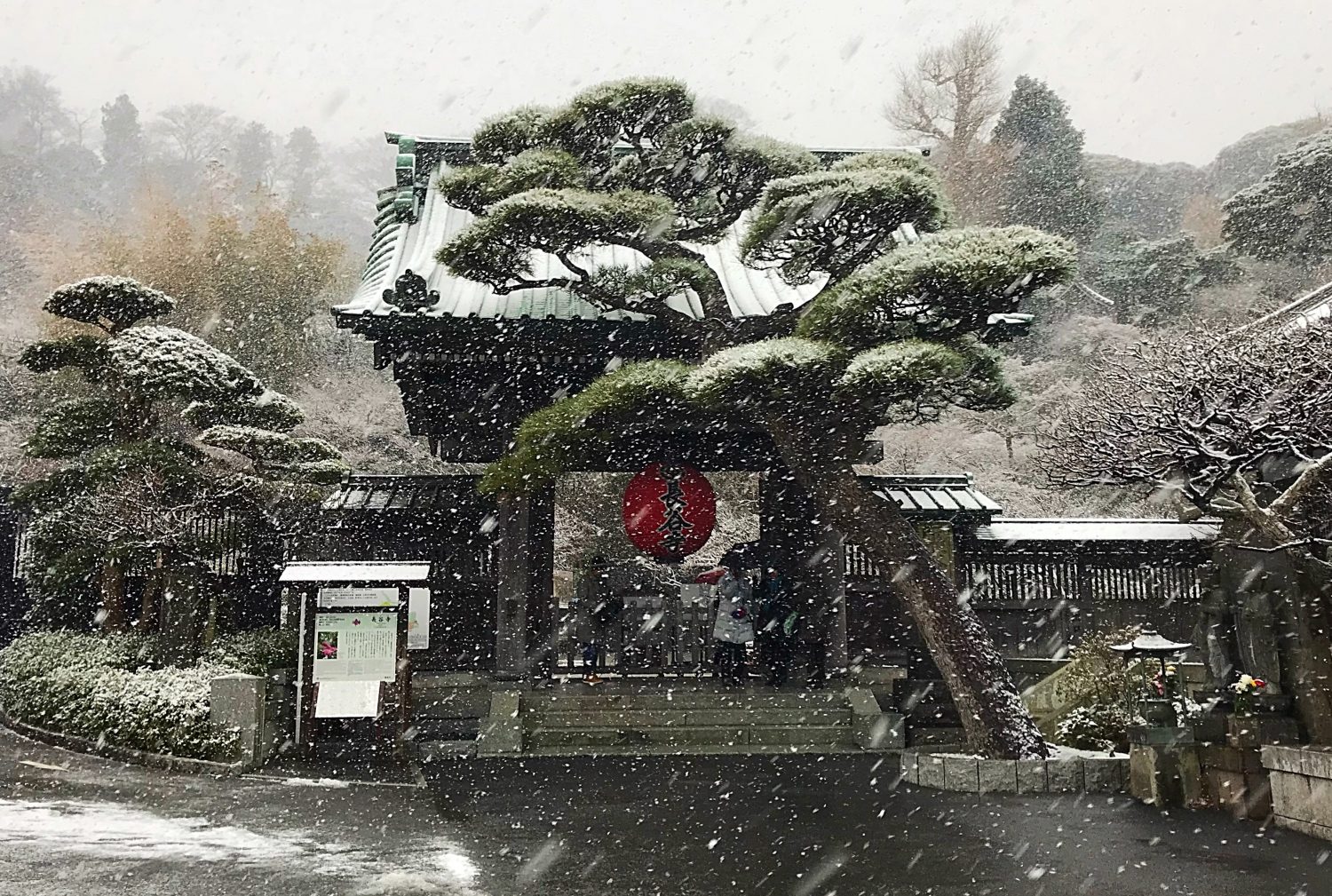
There's nothing like a big, red, scary-looking demon to keep out the riffraff. This Nio at Sugimoto Dera, along with his partner on the opposite side of the entrance gate, does a solid job.
Dozens and dozens of very weather-worn stone stupas sit in the clearing at the top of the stairs at Sugimoto Dera. They represent the 300 samurai who died during a battle by the temple between Hojo forces and Ashikaga forces in 1337. I didn't count, but perhaps there are 300 in all.
Through the Incense Burner 2
Sugimoto Dera again, but looking through the incense burner in the other direction.
Moss-Covered Stairs
I can't help but wonder if the stairs leading up to the hon-do at Sugimoto Dera are the original stairs. If they are, it would make them 1282 years old, as Sugimoto Dera was built in 734 AD (though fires have meant it's seen some rebuilding). Maybe a bit of a stretch, but they do … Continue reading Moss-Covered Stairs
Through the Incense Burner
Sugimoto Dera doesn't have building after building after building like a lot of the other temples in Kamakura. It's pretty simple. The building that it does have at the top of the moss-covered stone stairs, though, is pretty nice. Too bad you can't take pictures inside! This was the best I could do without risking … Continue reading Through the Incense Burner
Sugimoto Dera Roku Jizo
Kamakura has an awful lot of Roku Jizo (six Jizo statues standing together). The best-known is likely the Yuigahama Dori Roku Jizo, but if you keep your eyes peeled, you'll find others sprinkled around town. The ones pictured stand on the grounds of Sugimoto Dera, the oldest temple in Kamakura.
Garden Upkeep
Japanese gardens don't tend themselves. A temple gardener works on the grass of the garden at Engaku-ji.
Sunshine Gate
Engaku-ji's main gate with the sun beating down on it. Engaku-ji is number two of Kamakura's five great Zen temples. It's located right beside Kita-Kamakura Station, which makes it the number one temple for convenience.
Medieval Tombs
Kamakura is riddled with small caves carved into the soft rock. These caves are tombs, built in medieval times. According to Wikipedia, Kamakura has anywhere from 1500 to 5000 yagura cut into its hills. It is assumed that many have yet to be found. The yagura pictured is Kamakura's largest, located at Meigetsu-in in Kita-Kamakura.
Kencho-ji Tengu
At the back of Kencho-ji's vast grounds, a hill rises up, topped by Kencho-ji's shrine, the Hansobo. Sprinkled over the hill is a collection of karasu-tengu (crow tengu), a kami (god)/yokai (supernatural being) combination creature. Most tengu in Japan, nowadays at least, are depicted as having exceptionally long noses, though the older style have more … Continue reading Kencho-ji Tengu
 女性専用 - Inn By The Sea Kamakura - Women's Guesthouse